
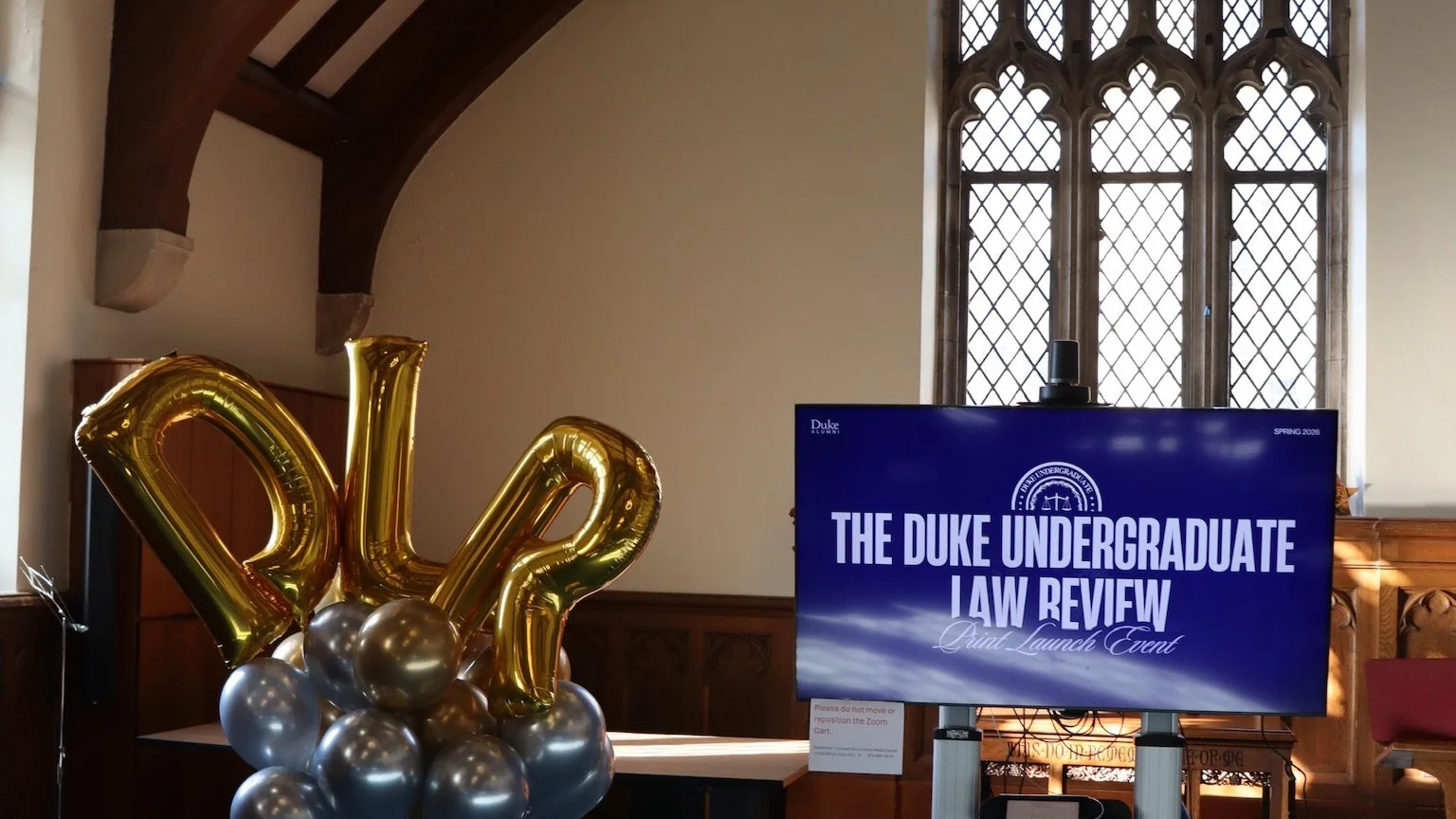
The Online Journal
Our Online Journal features original legal and public policy analysis pieces written and edited by our Online team of Duke undergraduates. The opinions expressed by the Online team are not representative of any views held by the Duke Undergraduate Law Review Executive Board.
Reforming Section 702: Fourth Amendment Limits on Warrantless Digital Surveillance
Section 702 of the Foreign Intelligence Surveillance Act (FISA) has long occupied a contested space between national security necessity and constitutional constraint. Enacted in 2008, the provision permits warrantless surveillance of non-US persons abroad but has increasingly been used to access communications involving US citizens. Through the practice of “backdoor searches,” federal agents can gain access to Americans’ private communications without a warrant. In March 2026, a bipartisan group of lawmakers introduced the Government Surveillance Reform Act, which would require the FBI to obtain a warrant before accessing Americans’ communications collected under Section 702.
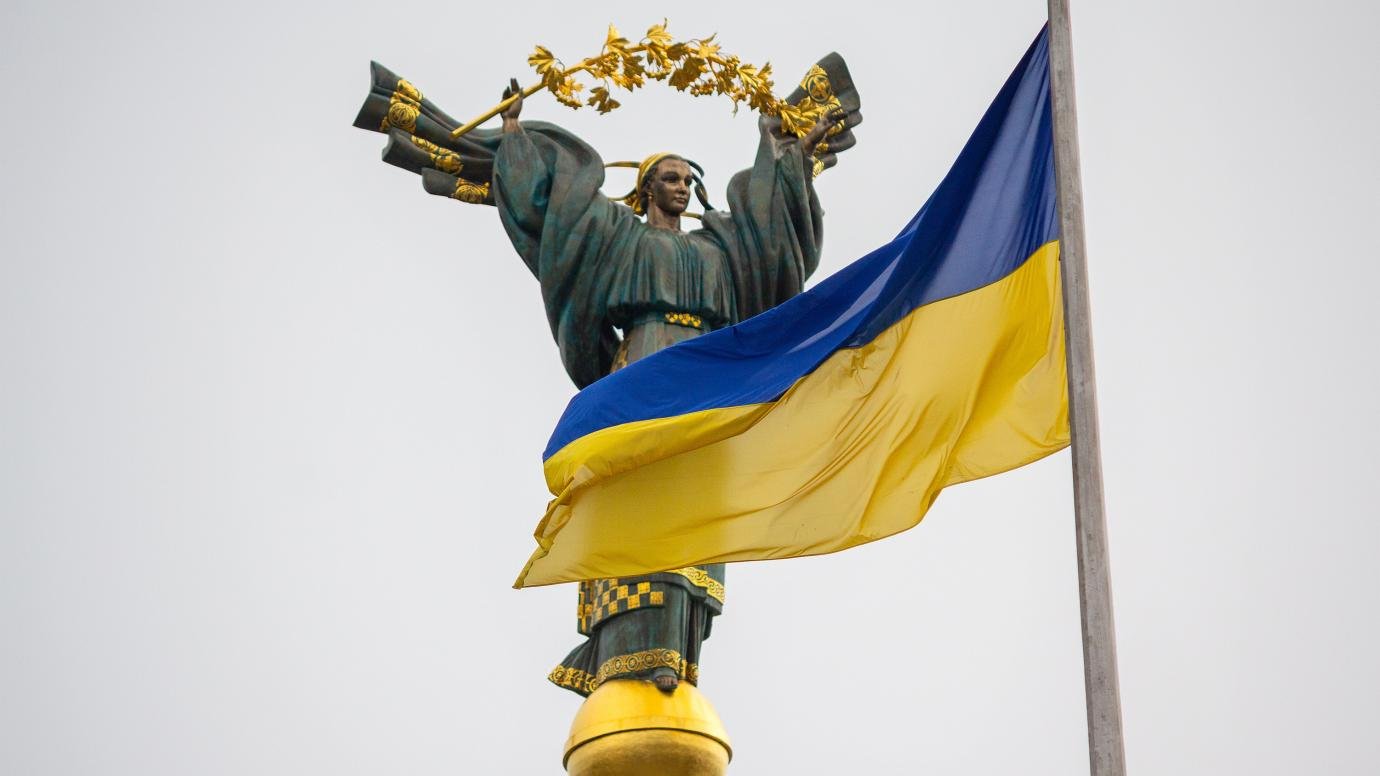
Cultural Heritage Protection as a Humanitarian Imperative in Ukraine
By Juliette Workman
During times of war and strife, domestic governments, international organizations, and NGOs turn to fund immediate humanitarian needs for affected populations. When it comes to funding during wartime, however, there is one sector that is consistently overlooked: cultural institutions and the arts. The Ukrainian state has over 140,000 registered monuments and objects of immovable cultural heritage. As of October 2023, the World Monuments Fund has documented 835 instances of destruction or damage to museums and cultural heritage sites due to the Russian invasion. Ukraine’s system of cultural heritage protection has undergone a profound transformation during four years of full-scale war, arguably creating a shift from a cultural preservation concern to a humanitarian priority.
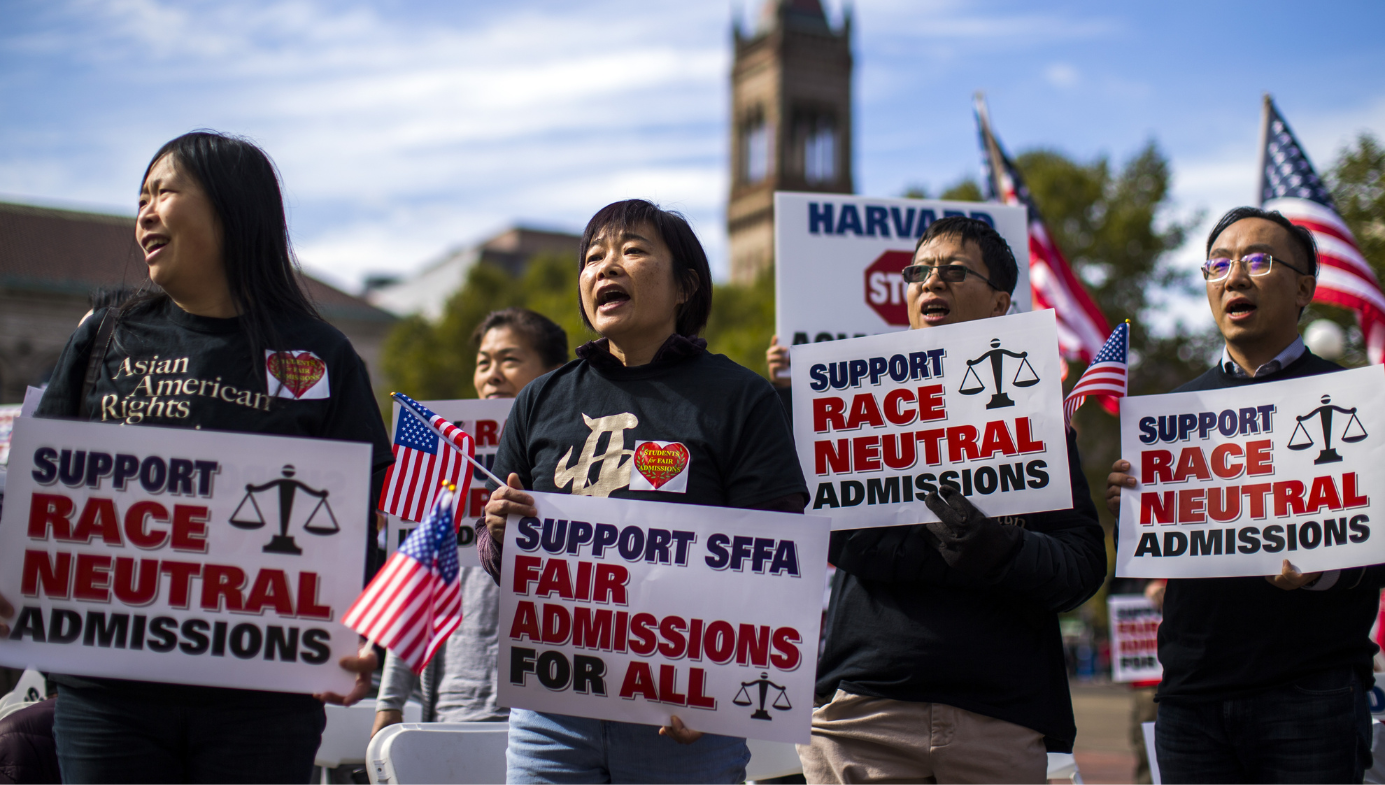
Rethinking Diversity: Students for Fair Admissions v. Harvard and the End of Race-Conscious Admissions
By Merritt Lubetsky
The Supreme Court’s ruling in Students for Fair Admissions v. President & Fellows of Harvard College (2023) marked the end of race-conscious admissions that had been constitutionally tolerated since Bakke and Grutter. For many decades, elite universities had justified the holistic use of race as a means of realizing the educational benefits of diversity. In SFFA, the Court reinterprets race classifications in admissions as unconstitutional. In doing so, although explicit racial categorizations are abolished, the decision likely invites more nuanced legal battles over less conspicuous attempts to promote diversity.

One Nation, One Language?
By Ava DeBenedet
Few events rival the Super Bowl halftime show in viewership or cultural impact. This year’s halftime show for Super Bowl XI was no different; with 128.2 million viewers of the live broadcast and millions more still counting, conversations surrounding Bad Bunny’s headlining show are unavoidable. Unlike years past, an alternative “All-American Halftime Show” with supposedly “no agenda other than to celebrate faith, family, and freedom” was simultaneously aired by Turning Point USA. The performers, however, repeatedly endorsed common conservative viewpoints, creating an ideological contrast with Bad Bunny implied to represent the political left. While Bad Bunny has publicly voiced his political opinions in the past, such as by denouncing ICE at the 2026 Grammys, politics have never been separate from sports.

The Legal Reach of American Humanitarianism
By Kiana Raoufiniai
As protests and reports of violence grow, the political situation in Iran is proving to be more and more precarious. The possibility of foreign aid through the United States, when framed as humanitarian aid rather than geopolitical interference, seems alluring to many Iranian citizens. Though there are many pressing legal limitations that must be taken into consideration, historical precedent demonstrates that the United States has previously supported international human rights causes through sanctions, diplomatic pressure, and military intervention. Since the victory of the Iranian people is an invaluable victory not only for the country but also for global democracy and peace, carefully calibrated US intervention may be warranted.

Preventing Consumer Deception in the Age of AI: Tackling ‘Synthetic Performers’ in Digital Advertising
By Jacqueline Rodriguez
The rapid rise of synthetic media, including generative artificial intelligence (AI) and deepfakes, has revolutionized content creation. Generative AI has empowered advertisers to produce visually convincing images, voices, and even virtual characters inexpensively and at scale. However, this technological leap has also blurred the line between what is real and what is fabricated, creating new pathways for consumer deception.

Policing the Gray Zone: The False Claims Act and Misrepresentations in Trade and Regulatory Compliance
By Lawrence Wu
When a company misclassifies an imported product or certifies compliance with a dense trade regulation, the error has traditionally been treated as just an error. It might prompt an external audit, a civil penalty, or a course of correction, but rarely does it trigger allegations of fraud. Increasingly, that assumption no longer holds. Today, a mistake in filing can expose companies to damages, whistleblower suits, and years of litigation under the False Claims Act.
When Law Triumphs Over Ideology: Textualism, Originalism, and Unexpected Outcomes
By Ameera Mehan
Justice Neil Gorsuch once wrote that judges should not be mistaken as “politicians in robes.” [1] The separation of powers between the judicial and legislative branch, while constitutionally apparent, is superseded as many label justices biased towards either conservative or progressive agendas. This particularly stems from the appointment process, wherein judges are selected by partisan Presidents who often base their decisions upon the preexisting alignments of their nominees. Such classifications carry a different meaning in the judiciary where law is not driven by politics; outcomes of court rulings are often unanticipated, solely grounded in constitutional right or wrong rather than ideological right or left.

The Architecture of Accountability: Domestic and International Legal Frameworks Governing U.S. Arms Transfers
By Harrison Green
The United States occupies a dichotomous role in the global order as both a primary security guarantor and the world’s largest arms exporter. This position creates a profound legal tension when American-manufactured munitions are linked to documented civilian harm in foreign conflicts. As reports of “gross violations of human rights,” or GVHR, surface in modern theaters of war, the legal community must grapple with the threshold for legal responsibility, both concerning the state and its individual actors, when providing the means for violations of International Humanitarian Law (IHL).
Bargaining with the Sixth Amendment: The Role of Risk Aversion and “Trial Penalties” in Plea Bargaining
By Sarah Guttman
A cornerstone of the American legal system is the Sixth Amendment, which guarantees everyone the right to a fair jury trial. Despite this assurance, an increasing number of defendants are being sentenced without exercising their right to a full trial. Each year, around 98% of criminal cases in federal courts are being decided not by a trial, but by a plea bargain. Plea bargains are deals offered by the government before trial that grant defendants reduced sentences in exchange for an admission of guilt in court.

AI Development as a Copyright Battlefield: On a Fair Use Provision for Text and Data Mining
By Margalit Salkin
Developments in artificial intelligence are reshaping systems of technology and knowledge, sparking controversy about AI’s ethical implications. This paper analyzes how AI fits within the current understanding of U.S. copyright law. I propose the creation of a fair use text and data mining (TDM) exception for artificial intelligence, enabling the United States to respond to copyright ambiguities created by deep learning algorithms.

Seventy-five Years of Data: Evaluating DHS’s Expanded Biometric Record
By Alex Precourt
The Department of Homeland Security (DHS) is moving forward with an expansive new plan to collect and store biometric data, including facial scans, fingerprints, and voice patterns, from all foreign travelers entering or leaving the United States. According to The Wall Street Journal, DHS plans to retain this data for up to seventy-five years, creating long-term biometric files for millions of travelers. Because biometric identifiers cannot be changed once compromised, privacy and cybersecurity experts have warned that large-scale biometric databases present especially attractive targets for hackers and foreign intelligence services. The Electronic Privacy Information Center (EPIC), for example, has cautioned that long-term retention of biometric data significantly increases the risk of misuse or catastrophic breach if systems are penetrated.

Cancel Culture: Democracy’s Silencing Evil
By Ameera Mehan
In the digital age, speech is more often penalized by online audiences than by the courts. The prevalence of social media has globalized public forums, voicing an overwhelming abundance of opinion and broadening the opportunity for civil discourse engagement. However, the risks posed by “cancellation” produce a coerced silence that is enforced, not by governmental power, but through fear of public condemnation.

Too Big To Fail? NVIDIA’s Dominance and Rethinking Antitrust Enforcement in the AI Era
By Jacqueline Rodriguez
In an era defined by rapid advances in artificial intelligence, the rise of leading chip manufacturers has reshaped both economic and regulatory landscapes. One such company that has established its dominance is NVIDIA. NVIDIA also holds an overwhelming market share in the AI and graphics processing unit (GPU) markets, capturing 92% in the add-in-board GPU market as of Q1 2025. Becoming the first company to reach $5 trillion in market value, its power and wealth are undeniable. However, NVIDIA’s rapid ascent from a graphics-card company to the world’s leading supplier of AI-accelerator chips has prompted new antitrust questions.

The Neurological Fifth Amendment: Reassessing Self-Incrimination in the Age of Brain-Computer Interfaces
By Alix Sztejman
The Fifth Amendment’s protection against self-incrimination stands as one of the most profound constitutional barriers against government intrusion, protecting the sanctity of human thought from compelled discourse. This constitutional safeguard was established to prevent the state from forcing a defendant into a confession. However, what occurs when the government is able to access the mind directly, superseding speech entirely?
The Constitutional Risks of Judicial Elections
By Ava DeBenedet
Out of 5.5 million ballots cast, North Carolina’s 2024 Supreme Court election was determined by a margin of just 734 votes. After six months of protests and disputes over ballot counting, Jefferson Griffin conceded defeat to Allison Riggs [3]. As shown by the tenth of a percent difference in results between the two candidates, the race clearly divided the state along ideological and partisan lines. But what do such divisions mean for a branch of government that is supposed to be non-partisan?
Legal Frameworks for AI in Immigration Processing
By Kiana Raoufiniai
Artificial intelligence is revolutionizing the landscape of administrative decision-making in the United States. Algorithmic systems are increasingly tasked with determining individuals' rights and immigration status. Supporters of the technology argue that technological automation will accelerate notoriously lengthy immigration proceedings and eliminate human error. However, fully integrating AI into areas as critical to the American experience as immigration raises questions about due process, accountability, and discrimination.
Due Process and Public Safety in the Development of Bail Reform
By Alex Precourt
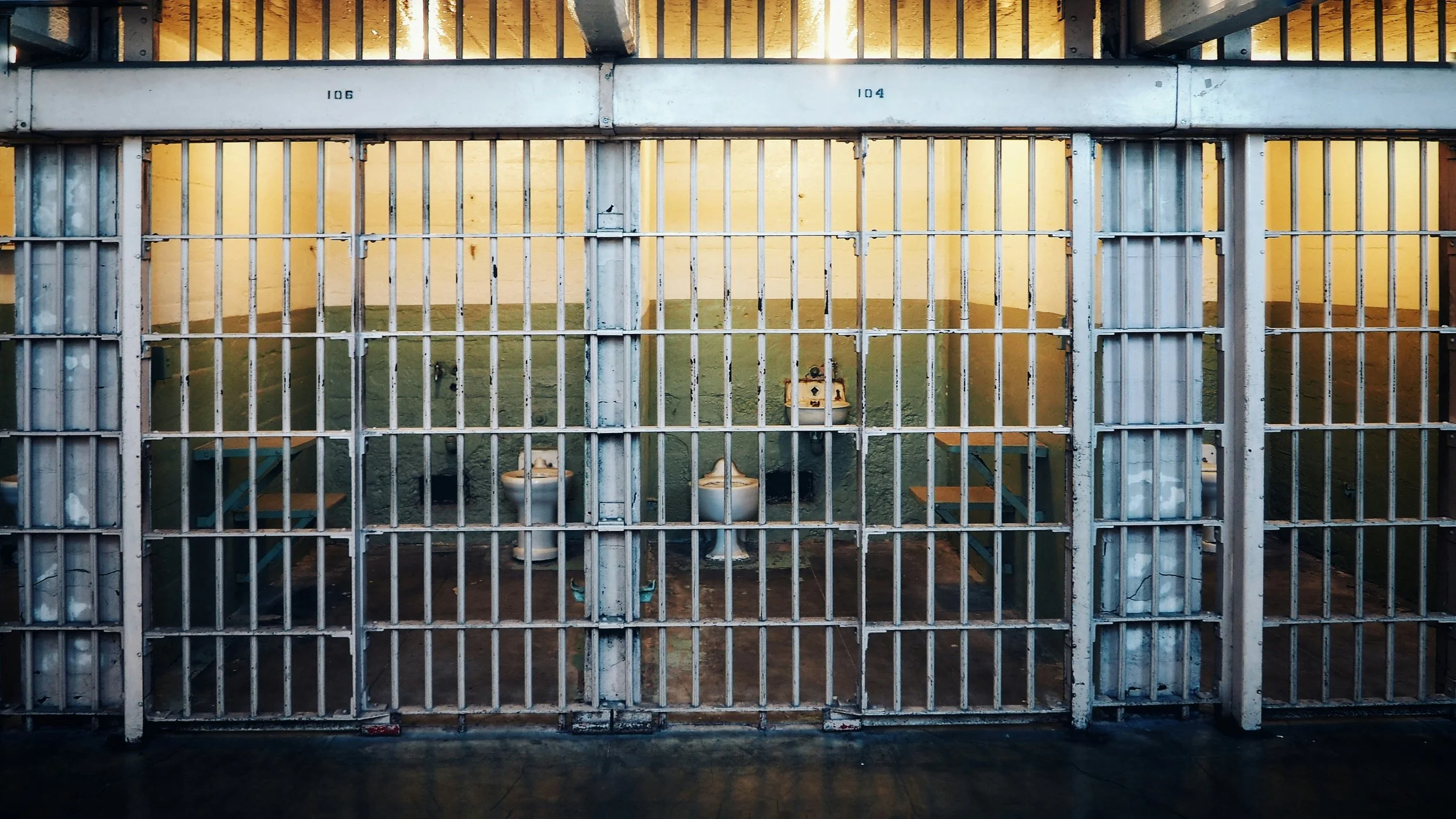
The American bail system rests uneasily between two constitutional imperatives: the protection of individuals' liberty and the preservation of public safety. This tension is particularly evident in pretrial detention decisions involving defendants with prior violent convictions. When judges deny bail based on a prediction of dangerousness, they confront a constitutional question at the core of American due process: Does preventative detention before conviction undermine the presumption of innocence and violate the Eighth Amendment’s protection against excessive bail?
Turning the Nondelegation Doctrine Inward: Why Judges Must Stop Delegating Core Judicial Power
By Harrison Green
The separation of powers, which divides governmental authority among the three federal branches, is the core structural feature of the American government. One of the biggest challenges to this system today is the massive amounts of delegated power held by unelected administrative agencies. The following analysis will establish that the main principle used to limit that power, the nondelegation doctrine, must also be applied internally to the federal judiciary.

The Triple Threat: Platform, Moderator, and University Liability for Anonymous Campus Harassment
By Max Zinkin
Fizz, the social media app that provides a private anonymous message board for college and high school students, has, since its founding in 2021, established itself on more than 620 campuses and has raised $41 million in funding as of September 2025. [1] At each school, Fizz is monitored primarily by students at that same school. The app is expanding rapidly, quadrupling its active user-count in the past few months. While Fizz has a “promise of wholesome community building,” it has also faced controversy.